
ABSTRACT:Considering the sets of even and prime numbers are infinite and the inability to predict the existence of prime numbers, an empirical solution to the Goldbach conjecture isn’t possible. Any solution will have to be a surjective mapping from every element in the set of even numbers to at least one element in the set of Goldbach pairs. A trivial Goldbach pair is defined as a prime number at the midpoint of any Goldbach domain paired with itself. A non-trivial Goldbach pair is defined as two different prime numbers equidistance (symmetrical) from the midpoint of any Goldbach domain. By its nature, the solution must impose this mapping for all 2M as a consequence of structure and composition method, not as a coincidence.
I encode parity and primality in geometric objects. Beginning with the prime even object the circle, the disc of the circle encodes all composite evens, the bowtie of the disc encodes composite odds and the semidisc encodes odd primes. Only the prime even is treated as primitive, all the others are derived from it. Given these structures and parity constraints on composition, two new concepts are introduced: relative orientation (phase) of the objects under composition and primes are prime and even/odd at the same time. Primality is treated as a structural configuration of parity. This duality leads to two different structural configurations of the objects which are determined at composition time by the composition constraints.
The objects are then composed around the midpoint M, the line of symmetry for the line 2M. In this way rules of composition are constrained by the relative phase of the objects and parity and primality configuration. From this and the required linear inversion symmetry of two points around the midpoint of the Goldbach domain for non-trivial Goldbach pairs, I show there is only one object that meets the required linear inversion around the midpoint and composes to 2M for any 2M and that’s the prime object.
KEYWORDS: Goldbach, number theory, phase shifts, geometry
Objective
The objective is to define an isomorphism between integer parity/primality and a set of geometric objects and a composition method such that the objects can be composed to preserve even parity.
The Set of Geometric Objects ( )
)
| Geometric Object | Arithmetic Role |
| Primitive Even Source | |
| Composite Even | |
| Composite Odd | |
| Odd prime |

Circle Disc Bowtie Semidisc
Prime/Parity Duality
The circle is prime and even at the same time and the semidisc is prime and odd at the same time. The even disc is treated as even but with a different structural configuration than the prime even. The prime odd semidisc is treated as odd but with a different structural configuration than the odd bowtie. The parity structures are the same for both parity and prime but can be configured accordingly to satisfy parity and primality constraints on composition.
That is to say, the circle and the disc have the same interior area but the disc’s configuration includes that area in its structure. The bowtie and the semidisc have the same interior area but their structural configurations are 90 degrees out-of-phase. At composition time, composition constraints on parity force the required configurations.
Geometric Phase
Relative orientation for composition of two geometric objects is necessary to satisfy parity and primality constraints.
Even Object
- Phase: no phase constraints
- Consequences:
- The circle is the identity element. When composed with any other object, the result is that object.
- The circle is the even prime. When composed with an even object the result is even, when composed with an odd object, the result is odd.
Odd Object
- Phase:
and
constraints.
- Consequences:
- The semidisc is the odd prime. When composed
out-of-phase with itself, it produces the even disc.
- When an odd prime semidisc is composed with an even, the even takes on the circle configuration and the odd prime semicircle can take on the semidisc or bowtie configuration which composes to the appropriate odd.
- The semidisc is the odd prime. When composed
Parity constraints and Isomorphism
| Arithmetic Rule | Parity | ||
| Even Prime + Even Prime = Even | Even | ||
| Even Prime + Even = Even | Even | ||
| Even Prime + Odd = Odd | Odd | ||
| Even + Even = Even | Even | ||
| Odd + Odd = Even | Even | ||
| Odd Prime + Prime Even = Odd | Odd | ||
| Odd Prime + Odd Prime = Even | Even | ||
| Odd Prime + Odd = Even | Even |
Definition of Phase
Composition
The objects and their relative phase are defined in the plane and composition is a reflection across a line of symmetry at the midpoint of an orthogonal line.
The fundamental operation is , but the outcome is governed by the phase constraint (
) and configuration corresponding to the object’s structure.
The Phase Operators
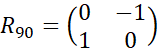
The geometric constraints are defined by the rotational matrices:
- Composite Phase (Orthogonal Coupling):
- Prime Phase (Linear Inversion):
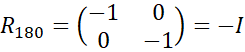
In other words, composing any two objects requires compatible phases to preserve even parity. Composing two odd bowties symmetrical around the midpoint M requires they be oriented out-of-phase with one another. Composing two semidiscs requires they be
out-of-phase.
Idempotency and Instability
Idempotency distinguishes stable and unstable elements:
- Universal Idempotency:
(circle) and
(disc) are idempotent regardless of relative phase, representing stable structural parity.
- Phase-Dependent Instability
(Semidisc) is only symmetrically idempotent at
relative phase and the
only at
and
. This means they are dynamically unstable and require an external phase operator of either
or
to be forced into the higher-order even parity
(Semidisc).
Phase and Necessity
The stability of the even structure is conditioned entirely on the relative phase () of the composing objects, which must be engaged to satisfy the arithmetic sum.
The  Mandate (The Unique Requirement)
The general non-trivial Goldbach sum () requires the two primes to be linearly separated (
) and perfectly symmetrical around the midpoint
.
- Geometric Requirement: This linear separation is isomorphic to the anti-collinear inversion symmetry, uniquely enforced by the
Phase Operator (
).
- Structural Integrity: The Even Structure (
) must possess the
symmetry to model this sum.
Structural Failure and Necessity
We distinguish between two types of structural composition:
- Trivial Solutions (
Phase): Compositions using the
operator (e.g.,
) are sufficient for Parity Conservation (
), it avoids the
mandate. This demonstrates parity preservation possibility, but not necessity in the Goldbach case.
- Necessary Solution (
Phase): The Prime Semidisc (
), when composed symmetrically around
, the only way it can close the structural gap to form the continuous disc (
) and preserve parity in the Goldbach case is by imposing the maximal
Phase Operator (
).

In other words, the only way to compose two odd prime objects to preserve the even parity of the disc around the midpoint of 2M is to compose them out-of-phasesatisfying the anti-colinear inversion required by non-trivial Goldbach pairs. Only the odd prime object composes in this way, the circle/disc compose in phase and the bowtie composes at
out-of-phase implying they can be described as midpoint pairs composing along the midpoint line of symmetry rather than around it. This is a consequence of the design of the model and the method of composition, not a coincidence.
Global Co-movement
Global Co-movement states that the entire number line is a single, coupled structural system. Any change to the midpoint () necessitates a symmetric, prescribed, and
-constrained transformation of every single element in the domain, thereby preserving the structural necessity across the entire infinite set of even numbers.
The Dynamic Mechanism
The structure of the Even domain is not static; it is a continuous sequence (, 2M, 2M+2, 2M+4,
) where each 2M is derived from the previous one by a unit shift of the midpoint.
- Midpoint Shift: When moving from 2M to 2(M+1) = 2M+2, the midpoint shifts from M to M+1.
- Universal Displacement: This shift causes every prime (
) and composite (
) on the number line to be repositioned relative to the new origin (M+1).
k’ = p – (M+1)
- The Structural Mandate: This universal, continuous repositioning means that the entire sequence of even numbers must adhere to the same structural constraints to maintain algebraic consistency.
Necessity via Co-movement
Co-movement elevates the necessity from a single point to a global rule:
- Local Necessity: Given 2M, the Prime Semi-Circle
is the unique element forced to use the
operator to achieve conservation.
- Global Necessity: If the prime structure
were to fail to appear for any subsequent even number 2N, the
linear inversion symmetry would be broken at that point.
- Since every Even number is coupled in the sequence (2N depends on the structural integrity of 2N-2, etc.), a single structural failure at 2N implies that the structural rules of the
Field break down.
- This discontinuity (the failure to engage the mandatory
symmetry) would cause the entire system to collapse into an incomplete or algebraically inconsistent state.
- Since every Even number is coupled in the sequence (2N depends on the structural integrity of 2N-2, etc.), a single structural failure at 2N implies that the structural rules of the
Conclusion: The Structural Guarantee
The model demonstrates that the Prime Semidisc is the unique element structurally dependent on the
operator to preserve even parity. The existence of the anti-collinear inversion symmetry
is non-negotiable, imposed for the Goldbach domain.
Therefore, the Prime Pair construction is the structurally necessary condition required to maintain the algebraic integrity and continuity of the entire infinite set of even numbers, serving as the essential anchor for the Global Co-movement across all 2M.
References
Foundational Works: The Goldbach Conjecture
- Goldbach, C. (1742). Letter to Leonhard Euler, 7 June 1742. (The original statement of the conjecture).
- Hardy, G. H., & Littlewood, J. E. (1923). On the representation of a number as the sum of two squares and Waring’s problem. Proceedings of the National Academy of Sciences of the United States of America, 29, 399-405. (Pioneering work using the analytic circle method, which many non-analytic approaches try to emulate structurally).
- Vinogradov, I. M. (1937). Representation of an odd number as the sum of three primes. Doklady Akademii Nauk SSSR, 15(6), 291-294. (Established the weak Goldbach Conjecture for sufficiently large numbers, foundational work).
Set Theory and Symmetry Classification
These sources establish the formal definitions and properties of the symmetry Sets () used as the structural elements of the Symmetry Set (
).
- Cotton, F. A. (1990). Chemical Applications of Set Theory (3rd ed.). Wiley. (Standard textbook for defining and classifying point Sets like
, and their operations like rotation and reflection).
- Weyl, H. (1952). Symmetry. Princeton University Press. (A classic, broad philosophical and mathematical treatment of symmetry that justifies its role as a fundamental structural principle).
- Armitage, J. V., & Kneebone, G. T. (1970). Set. Springer. (For foundational definitions of Isomorphism, Homomorphism, and the structure of abstract Sets).
Related Non-Analytic and Geometric Approaches
- Bombieri, E. (2007). The Goldbach Conjecture: The role of symmetry. Rendiconti del Seminario Matematico della Università di Padova, 117, 39-65. (Discusses the role of symmetry and combinatorial sieve methods in relation to the conjecture, providing context for the idea that symmetry is key).
- Yuan, Y. L. (2018). A geometric interpretation of the Goldbach conjecture. Published online. (Represents a growing body of work that uses geometric visualizations, such as lattice points or circles, to reframe the problem).
- The Theory of Modular Forms and Elliptic Curves. (General reference). (Often used to model deep number theory problems, this field provides precedent for mapping arithmetic problems onto highly structured, geometric objects).